
Last updated: October 24, 2026
Key Takeaways
- Results may be above, near, or below the tested benchmark.
- Missing context makes a report easy to misread.
- Some reports use “ND,” “non-detect,” “<RL,” or a similar notation.
- A certified laboratory usually gives clearer limits, methods, and chain-of-custody details.
A water test report tells you what was measured, how the result was reported, and whether the number is being compared with an EPA maximum contaminant level, or MCL. Quick answer: if you have a home water test report in hand, start with the unit, the reporting limit, and the comparison value; that is the fastest way to read it correctly. In this guide to How to Read a Home Water Test Report, the key is to compare each result with the right threshold and then decide whether the report points to a plumbing issue, a treatment issue, or a reason to speak with a qualified professional about your situation. The EPA’s consumer guidance on drinking water testing also emphasizes using the right benchmark and method for the water source. EPA drinking water testing and CDC private well testing are useful references.
If the report came from a home water test kit, or from a certified laboratory, the layout may look different, but the logic is the same. This guide applies to homeowners who already have the report in hand and want to read it correctly before making an install decision. Because this is a health topic, a qualified professional is the right next step for any situation involving illness, infant formula, pregnancy, a private well with a serious exceedance, or a report you do not know how to interpret safely.
Who this guide is for — and what you need first
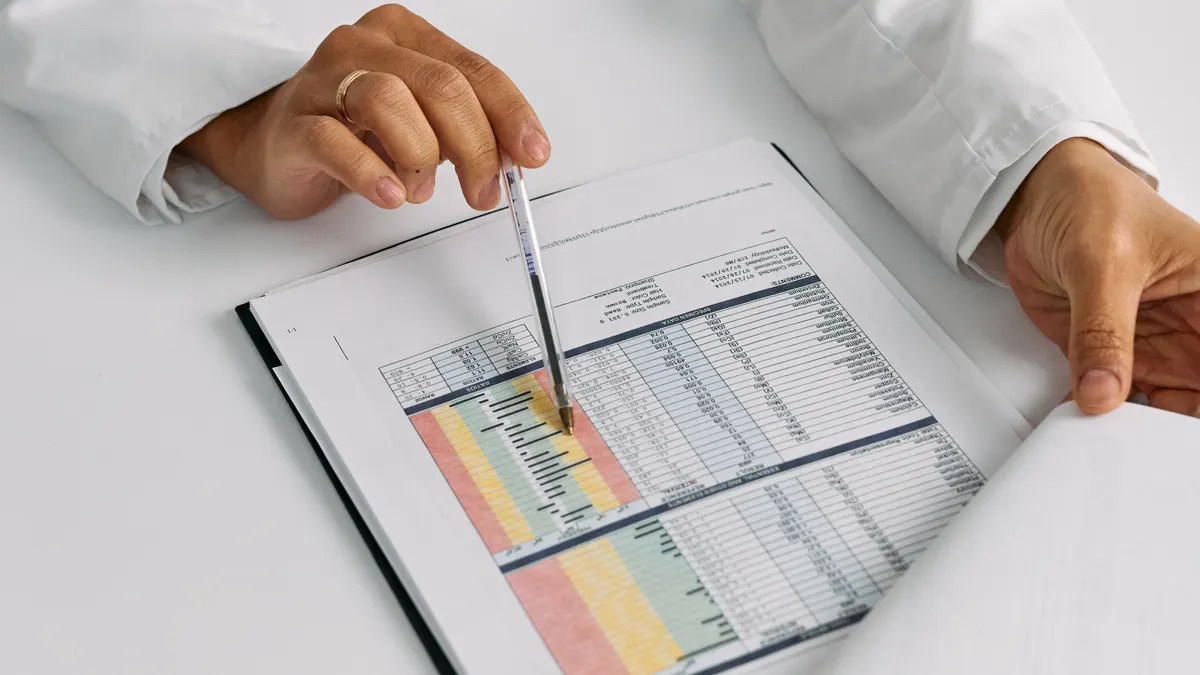
This guide is for a homeowner who has a printed or PDF water test report and wants to know what the numbers mean without guessing. It assumes you already know where the sample came from — kitchen tap, bathroom tap, private well, or another fixture — and that you can see the contaminant names, the units, and any note about whether the lab found the substance above the reporting limit. A report without those details is hard to read and easy to misread.
A useful report usually includes at least four things: the analyte name, which is the substance measured; the result; the unit, such as parts per million or parts per billion; and a comparison value, often an EPA maximum contaminant level. Some reports also include “ND,” “non-detect,” “<RL,” or a similar notation. That small symbol matters. It means the substance was not detected above the lab’s reporting limit in that test, and it is still wise to confirm the limit before treating the result as proof that nothing is present. The EPA’s drinking water pages explain why the reporting limit matters as much as the result itself. EPA drinking water basics can help with that check.
The first thing to look for is whether the test was done by a certified laboratory or by a home water test kit. A certified laboratory is more likely to provide clear chain-of-custody language, method names, and detection limits. A kit may be useful for screening, but its numbers can be less precise, and some kits are designed for rough ranges rather than exact values. If the report is from a strip test or color disk, treat it as a rough guide, and consult a professional if the result affects a treatment or health decision. CDC well testing guidance is a useful external reference for sample quality.
One useful way to think about this topic is that the report is a document, not a diagnosis. The report can show an exceedance, a borderline value, or no detected issue on the analytes tested. It cannot tell you every possible contaminant in the water, and it cannot by itself tell you whether you need treatment. That decision belongs to the context: the source water, the plumbing, the result pattern, and the standards used for comparison, so consult a professional if the report is unclear. For a broader framework, the hub on water quality testing and diagnosis is the right place to branch out from this page. A 2023 EPA review of private well testing notes that testing decisions depend on local conditions, not just one number.
How do you read the water test report, step by step?
You read a water test report by identifying the sample, checking the units, comparing each number with the correct standard, and then reading the notes before you decide anything. The order matters because a result like 12 can be ordinary in one unit and alarming in another, and because “detected” is not the same thing as “above the limit.”
- Confirm the sample source and date. Find the fixture, location, and sampling date on the first page. You need to know whether the sample came from a first-draw kitchen tap, a flushed tap, a private well, or a point after treatment. Verify the date and location match the water you actually want to judge. A problem is a report with no source listed, or one taken from the wrong tap, because the number may not represent the water you drink. Consult a professional if the sample history is incomplete.
- Identify the unit before you read the number. Look for parts per million (ppm), parts per billion (ppb), milligrams per liter (mg/L), or micrograms per liter (µg/L). ppm and mg/L are often used for the same scale in water reports; ppb and µg/L are the smaller scale. Verify the unit appears next to every result. A problem is assuming 10 means 10 ppb when the report actually means 10 ppm, which is a 1,000-fold difference.
- Find the reporting limit or detection limit. Search for RL, DL, MDL, or “reporting limit.” This is the smallest amount the lab says it can report with the chosen method. Verify that “ND” or “<RL” is explained somewhere on the page. A problem is treating non-detect as zero; it only means below the lab’s reporting limit, not absolute absence. If that limit is not stated, consult the lab or a professional before drawing conclusions.
- Read the contaminant name exactly as printed. Use the full analyte name, such as lead, nitrate, arsenic, total coliform, or iron, instead of a broad guess. Verify whether the report lists total, dissolved, or filtered forms, because those are not interchangeable. A problem is treating “total metals” as if it means the same thing as a dissolved metal result, so ask a professional if the form is unclear.
- Check the comparison value and source standard. Look for the EPA maximum contaminant level, a state standard, or another benchmark named on the report. Verify which benchmark is being used for that specific analyte. A problem is assuming every number on the page uses an EPA MCL; some items have secondary standards, advisory levels, or no federal MCL at all.
- Compare the measured result with the threshold, not with your expectations. If a contaminant has an MCL, compare the same unit to the same unit. Verify whether the report says “exceeds,” “meets,” or “below standard.” A problem is using taste or odor as the only guide, because some substances have no smell at levels that still matter for review.
- Check whether the report uses a running average or a single-sample result. Some standards are based on a running annual average or multiple samples, not one bottle. Verify if the report says “composite,” “average,” “90th percentile,” or “grab sample.” A problem is treating one result as the final regulatory picture when the standard is actually based on repeated sampling.
- Read the footnotes and qualifiers last. These may note sample preservation, holding time, method code, matrix spike recovery, or lab uncertainty. Verify whether any result is marked estimated or qualified. A problem is ignoring a qualifier such as “J,” which can mean the number is approximate and should not be read too literally.
A good reading of the report ends with a short summary in plain language: what was tested, which numbers were detectable, which ones were compared with MCLs, and which ones deserve a second look. A bad reading skips straight to “safe” or “unsafe,” which is usually too crude for a water report. The USGS also recommends reading the sampling context before making a decision. USGS water testing context is a helpful reference.
What the numbers actually mean on a lab report

The numbers on a lab report only make sense when you know the unit, the threshold, and the notation. A result of 0.008 mg/L means something very different from 0.008 ppb, and a result marked “<1.0 ppb” means the lab did not quantify the substance above 1.0 ppb, not that the water contains none.
Parts per million and parts per billion are concentration units. In water testing, ppm is the larger scale and ppb is the smaller one. Many contaminants are reported in ppb because the levels of concern are very small. For example, lead and arsenic are commonly reported in ppb on drinking-water reports, while hardness, chloride, or sulfate may appear in mg/L or ppm. If a report mixes units across analytes, do not compare the raw numbers directly without converting them first. A 1,000-fold unit error can happen fast.
Look for “ND,” “non-detect,” “U,” or “<RL.” These mean the analyte was not detected above the lab’s reporting limit. They do not tell you whether the contaminant is absent at all, only that it was below the method’s practical floor. That floor matters. A report with a reporting limit of 5 ppb is less informative for a low-level contaminant than a report with a reporting limit of 1 ppb.
The notation can also reveal whether the lab is signaling caution. A qualifier such as “J” often marks an estimated value; “B” may indicate the substance was found in a blank; “E” can indicate the concentration exceeded the calibration range. The exact coding varies by laboratory, so the report key or legend is essential. If a number is marked with a qualifier and sits near a threshold, that is the point to slow down, not speed up.
Taste and odor notes belong in the report, too, but they are not a substitute for chemistry. “Earthy odor,” “chlorine taste,” or “metallic aftertaste” can help describe the water, yet these notes do not identify the cause by themselves. Taste and odor can come from harmless aesthetic issues, treatment residuals, or contaminants that require more review. The report should be read as evidence, not as a verdict from smell alone. If taste is the only clue, a qualified professional can help match it to a test result.
Which standards matter, and when an MCL is not the whole story
An EPA maximum contaminant level is the main number to look for when the report names one, but it is not the only number that can matter. An MCL is a legal limit for a regulated drinking-water contaminant in public systems. A private well report may still use an MCL as a comparison point, but the well is not automatically governed the same way as a municipal supply.
Some analytes have a health-based MCL. Others have a secondary maximum contaminant level, or SMCL, which is usually about taste, odor, color, or staining rather than direct health risk. Iron, manganese, sulfate, and chloride are common examples of results that may be discussed this way on a report. A number above an SMCL can still matter for equipment choice and household nuisance, even when it is not treated as the same kind of health benchmark as an MCL.
A report may also use advisory levels, method detection limits, action levels, or laboratory flags. An action level is not the same as an MCL; it often triggers further review or treatment steps rather than a direct regulatory finding. If the report uses a state standard, that number may be stricter or different from the federal number, so the source line matters. Always read the source of the benchmark, not only the benchmark itself. The EPA’s drinking water rules explain this distinction in plain terms. EPA drinking water regulations is the authoritative source.
One practical rule helps here: if the report does not say what standard it is using, do not assume. The same measured value can be interpreted differently under a federal MCL, a state advisory, or a secondary standard. That is why a report can look “clean” on one line and still justify further review on another. The standard decides the meaning.
For a homeowner deciding on treatment, the right question is not just “Is there a number?” It is “What standard is the number being compared against, and does that standard apply to this water source and use pattern?” That question is especially important for private wells and for reports that include both health-related and aesthetic contaminants. In practice, the answer can change the next step by a lot.
How do I know if my water test report is a problem?
A water test report is a problem when the report shows an exceedance, an unclear standard, or a pattern that does not match the water source you meant to evaluate. The red flags are usually visible on the page before any outside advice is needed.
A result exceeds an MCL or action level: This means the measured concentration is above the comparison value named on the report — it deserves prompt review with a qualified professional, especially if the water is used for drinking, cooking, infant formula, or a private well.
The report uses “non-detect” but the reporting limit is high: This means the lab did not detect the substance above its method floor, but the floor may still be too high to rule out low-level contamination — ask what the detection limit was and whether a different method is needed.
The sample came from the wrong fixture or after unknown treatment: This means the result may not represent the water you actually use — repeat the test on the correct tap or sampling point before acting on it.
The report lists a contaminant you were not expecting, such as lead, nitrate, or coliform bacteria: This means the result may need contextual review rather than a simple yes/no answer — a qualified professional can help interpret the pattern and the follow-up testing.
The report gives taste or odor complaints but no clear lab context: This means the water may have an aesthetic issue, a treatment issue, or a source-water issue — do not infer the cause from smell alone.
The report is a kit result with no method, no limits, and no legend: This means the result is only a screen — a certified laboratory report is the better basis for an install decision.
If any of these apply, the report is not “bad” in a moral sense; it is incomplete for decision-making. The consequence of acting too early is the wrong treatment, the wrong size system, or no treatment where it is needed. The safer move is to slow down and get a clearer report or professional interpretation.
Common mistakes that lead to the wrong install decision
The most common mistakes are simple, and they change the meaning of the report enough to send a homeowner in the wrong direction. None of these mistakes requires a complicated lab background to avoid.
-
Comparing the wrong units. A result in ppm is not the same as a result in ppb. The consequence is over- or underreacting by orders of magnitude. The correct alternative is to confirm the unit on every line and convert before comparing.
-
Treating non-detect as zero. “ND” does not mean the contaminant is absent at any level; it means below the lab’s reporting limit. The consequence is false confidence. The correct alternative is to read the reporting limit and decide whether that floor is low enough for the question being asked.
-
Using taste and odor as the only evidence. Taste can help narrow the issue, but it cannot confirm the cause. The consequence is guessing instead of testing. The correct alternative is to match taste notes with lab data and source conditions.
-
Ignoring the sample source. A kitchen first-draw sample and a flushed sample can tell different stories. The consequence is comparing unlike results. The correct alternative is to verify where and how the sample was taken.
-
Overreading a kit result. Strip tests and color disks are useful for screening, but they are not the same as a certified lab report. The consequence is false precision. The correct alternative is to confirm important findings with a better method when the decision matters.
-
Missing the benchmark. A number alone does not say whether the water is out of range unless you know the standard used. The consequence is a report that looks alarming or reassuring for the wrong reason. The correct alternative is to find the exact comparison value named on the page.
The right response to a confusing report is not panic. It is to slow down, read the details, and ask for help when the report leaves out the one thing that decides the meaning of the number. That approach avoids expensive mistakes and keeps the decision tied to the evidence.
Drafted with AI; not yet reviewed by a person.