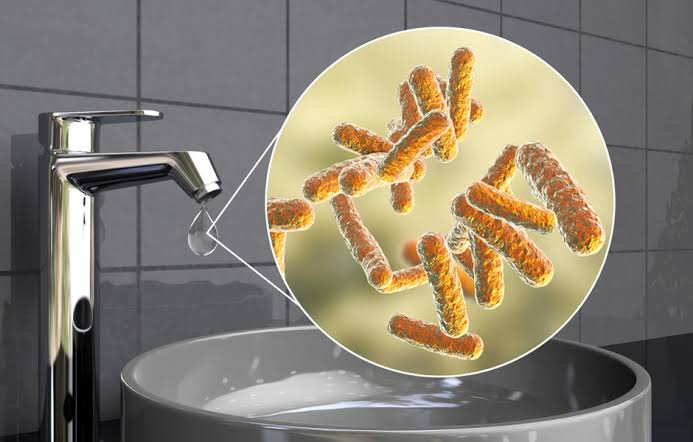
Last updated: September 10, 2026
Key Takeaways
- Reports often show systemwide results, not what comes out of your kitchen faucet after 8 hours of stagnation.
- If you suspect plumbing contaminants, collect a first-draw sample after water has sat unused for 6–18 hours.
- Verify the faucet was not used for showers, dishwashing, or flushing during that window.
- It does not assume you know chemistry terms like “MCL” or “ppb”; I’ll define them as I go.
Start with the utility report, sure. But if your house has old pipes, that report alone can miss the real culprit. That is the blunt answer to how to tell what contaminants are in your tap water. The utility data reflects water at the plant or out in the distribution system; a tap test shows what reaches your glass after pipes, solder, fixtures, and time in the plumbing have done their work.
Who this applies to — and what you need before you start
Anyone on municipal water or a private well fits here, especially if you want a likely answer without guessing wildly. You should be able to read a basic water quality report, label a sample bottle, and wait a few days for lab results. No chemistry degree required. “MCL” and “ppb” get explained along the way.
For a public water system, your first stop is the annual Consumer Confidence Report (CCR), also called a water quality report. U.S. utilities have to provide it once a year under EPA rules. Handy? Absolutely. Complete? Not quite. It usually does not capture lead released from your own plumbing, and it may miss a problem that shows up only at one faucet after water sits overnight.
On a private well, there is no utility report to lean on. You build the picture yourself with lab testing. For well owners, a broad panel is usually the sensible place to begin because groundwater shifts by region, depth, and season. Muddy, inconsistent, a little annoying. That is normal.
This topic carries real weight because a bad read can overlook lead, nitrate, arsenic, or microbial contamination. When water is discolored, smells like sewage, came from a flooded well, or a child or pregnant person is involved, the DIY route stops being the smart first move. Use a certified lab, and for urgent safety concerns, follow local public health guidance before drinking any more of it.
What your water report can tell you — and what it cannot
Your water report can tell you which contaminants the utility found, at what levels, and whether those levels were below the EPA’s Maximum Contaminant Level (MCL), meaning the legal limit for many regulated contaminants in public drinking water. It can also show whether treatment is doing its job for things like chlorine, fluoride, nitrate, disinfection byproducts, copper, and some metals. Still, if the result affects health decisions, talk to a professional and use EPA or state guidance with the report.
But it has blind spots.
- Lead from your own home plumbing. Lead often shows up after water leaves the utility, especially in homes built before 1986, homes with lead service lines, or homes with brass fixtures that leach lead.
- Contaminants not required in the report. Some chemicals are unregulated or only monitored under specific programs.
- Averages instead of your tap. Reports often show systemwide results, not what comes out of your kitchen faucet after 8 hours of stagnation.
The practical move is to read the report for the big categories, then decide whether you need a tap sample. A first-draw sample is the first water out of the faucet after water has sat in the pipes for at least 6 hours and no more than 18 hours. That sample is the one most likely to reveal lead or copper from plumbing.
Two useful public references are the EPA’s page on the Consumer Confidence Report and the EPA’s lead-in-drinking-water guidance. I’d begin there:
– EPA: Consumer Confidence Reports
– EPA: Lead in Drinking Water
If your report lists contaminants at low levels but your concern is a specific symptom, odor, stain, or plumbing issue, the report by itself is not enough. A neat little “everything is below the limit” line can still hide a problem that appears only at one faucet, after water stagnates, or in a certain season; if the result matters for health decisions, consult a professional and check the EPA or your state health department guidance.
How do I tell what contaminants are in my tap water?
You figure it out by combining three things: the utility report, targeted tap testing, and a few clues from the water itself. I’d use that order because it keeps you from paying for random tests before you know what makes sense.
- Get the water utility’s latest Consumer Confidence Report. Find the most recent PDF or mailed copy and look for the contaminant table, source water, and “definitions.” Check whether the system uses surface water or groundwater, because that changes the likely risks. A warning sign is a report that only says “compliance” and skips the results table; that usually means you have the wrong document.
- Check the sample type and timing. If plumbing contaminants are your concern, collect a first-draw sample after water has sat unused for 6–18 hours. Make sure the faucet was not used for showers, dishwashing, or flushing during that window. A sample taken after the tap runs for several minutes can wash away lead or copper and give you a falsely calm result. That math stops working fast.
- Decide which contaminant classes fit your situation. Homes with older plumbing should prioritize lead and copper. Wells call for nitrate, arsenic, bacteria, and often iron, manganese, and hardness. Check that the lab panel lists units such as mg/L for nitrate and ppb or µg/L for lead. A problem sign is buying a “basic water test” that only checks pH and hardness; that tells you almost nothing about toxic contamination.
- Use a certified laboratory for anything health-related. Pick a lab accredited under the EPA’s drinking water lab recognition program or your state’s equivalent. Make sure the test method and detection limit appear on the report. A strip test with a color block that cannot separate 3 ppb from 15 ppb for lead is just too blunt to guide a decision.
- Collect the sample exactly as instructed. Use the bottle the lab sends, do not rinse it unless instructed, keep cold samples refrigerated at about 4°C if the kit says to, and ship within the stated time window, often 24–48 hours. Check that the chain-of-custody form is complete if the lab requires it. An unlabeled bottle, a missing collection time, or a sample left in a hot car can wreck the result.
- Read the result against the right benchmark. Compare regulated contaminants to the EPA MCL or your local standard, not to a random internet number. For lead, remember there is no truly safe level; EPA action levels are not the same thing as a health threshold. “Below the limit” is not identical to “no concern.” If the result matters for a child, pregnancy, or an ongoing health issue, consult a professional.
- Repeat if the first result is borderline or inconsistent. If a result sits near the action level or clashes with what you smell, see, or taste, retest from the same faucet and from a second faucet. Check whether the issue is limited to one fixture, one floor, or the whole house. One sample does not settle it forever; contaminants can change by day and by draw point.
- Map the source. If the utility report looks clean but your tap result does not, the likely source is the home system: lead service line, brass fixture, corrosion, or a treatment device that is failing. Compare a kitchen sample, a bathroom sample, and if possible a sample from a point before any softener or filter to see where it starts. Blaming the city for a lead result that appears only after water passes through your own plumbing is the wrong target; if you are unsure, consult a certified plumber or water professional.
The best outcome is not a giant chemical list. It is a short, credible set of contaminants that are actually present, with enough detail to tell whether they come from the source water or from your house.
What contaminants should I test for first?
Begin with the contaminants that match your water source and your home, not a giant panel with 50 analytes you do not need. For public water, I’d prioritize lead, copper, and disinfection byproducts if you are worried about plumbing or taste. For wells, start with coliform bacteria, nitrate, arsenic, and the geology-driven metals that matter in your region.
Here is the practical way to choose:
- Lead: test if your home was built before 1986, has a lead service line, or has brass fixtures of unknown age.
- Copper: test if water tastes metallic, leaves blue-green staining, or your plumbing is new and has recently been soldered.
- Nitrate: test if you are on a well, especially in agricultural areas, because nitrate is a particular risk for infants.
- Arsenic: test well water in areas where arsenic is known to occur naturally in groundwater.
- Coliform bacteria / E. coli: test wells, especially after flooding, pump repair, or a new well start-up.
- PFAS: consider it if your area has known industrial, military, airport, or landfill impacts. PFAS are a class of persistent synthetic chemicals; not every lab panel includes them, and they are not always the first test I would order unless the local risk is credible.
A generic article will tell you to “test for everything.” Sounds careful. It is not. It burns money and slows the answer you actually need. A $25 strip panel that checks pH, hardness, chlorine, and iron may help with taste or staining, but it will not tell you whether your child’s bottle water has 8 ppb of lead or whether a well has bacteria.
If you are unsure, a state drinking water program, county health department, or an accredited lab can often tell you which analytes are standard for your ZIP code. That advice is worth more than buying a broad consumer kit with no clear detection limits.
What do the numbers on the lab report actually mean?
The numbers matter only when you know the unit, the benchmark, and the sample type. A result of 0.010 mg/L for lead is the same as 10 µg/L, or 10 ppb. If the report does not make that conversion obvious, write it down before you compare anything. Simple? Not always.
For regulated contaminants in public water, compare the result to the EPA MCL or action level listed in the report. For private wells, there may be no legal limit, so you compare to health-based guidance from the EPA, your state, or the lab’s interpretation sheet. Even then, that is not the same as “safe.”
A few interpretation rules help:
- Non-detect does not mean zero. It means below the lab’s detection limit.
- Below the limit does not always mean no issue. Lead is the classic example because the action level is a systemwide regulatory trigger, not a personal safety threshold.
- Turbidity is cloudiness, usually measured in NTU. A spike in turbidity after rain can point to sediment intrusion or well problems, and it can make disinfection less effective.
- Hardness is not a contaminant in the health sense. It matters for scale and taste, but it is not the same kind of concern as lead or nitrate.
If a result feels confusing, I’d read the lab’s method sheet before I trust a color-coded consumer summary. The method name, detection limit, and collection instructions tell you more than a slick “safe/unsafe” badge ever will.
When should you stop trusting the usual approach?
Stop using the usual report-plus-home-test approach when the situation points to an urgent health or contamination problem, because delays can matter.
Water has a sewage smell, a rotten-egg odor plus illness in the household, or visible contamination after flooding: This may mean microbial contamination or intrusion — Stop drinking it, use bottled water or a verified safe source, and contact local health or water authorities the same day.
Your home has a lead service line, and a first-draw tap sample shows elevated lead: This means the plumbing is part of the source — Do not assume flushing solves it; arrange repeat testing and plan for corrosion control or service-line replacement.
A baby, pregnant person, or anyone immunocompromised will drink the water and the well has not been recently tested: This raises the stakes for nitrate and bacteria — Get a certified well test now rather than relying on taste, smell, or an old report.
The water is brown, orange, or black after utility work or a nearby main break: This can be sediment, iron, or disturbed scale — Run only enough water to see whether the issue clears quickly; if it persists, contact the utility and do not assume a filter will fix it.
The report says “compliant,” but your tap water has a strong metallic taste, blue-green stains, or repeated sample failures: The source may be inside the house — Test another faucet and sample before any softener or filter, because the problem may be your plumbing rather than the supply.
You need a result for a legal, real estate, or medical decision: Consumer kits are the wrong tool — Use an accredited lab and keep the chain of custody intact.
If you are seeing acute symptoms and suspect contamination, get medical advice promptly. Water testing is useful, but it is not a substitute for diagnosis.
The mistakes people make when they try to identify tap-water contaminants
The biggest mistake is assuming taste, smell, or clarity tells the whole story. Lead, nitrate, and arsenic can be invisible and tasteless. That error costs time and can leave a serious exposure in place.
-
Testing only once. Water quality can vary day to day, especially in wells and after plumbing changes. The result is a false sense of certainty. The better move is to retest from the same faucet and, if needed, from a second fixture.
-
Using the wrong sample type. A flushed sample can miss lead from stagnant plumbing; a first-draw sample can overstate source-water contamination if you really want the utility supply. The result is a misleading diagnosis. Match the sample to the question.
-
Buying a broad consumer strip kit and treating it like a health report. Those kits may help with quick screening for chlorine or hardness, but they are not enough for a health decision about contaminants such as lead or bacteria. A certified lab is the better choice when the question is safety, not convenience.
-
Ignoring the report’s units. A number without units is easy to misread. Parts per billion, milligrams per liter, and micrograms per liter can describe the same concentration in different ways, so always convert before deciding what matters.
-
Assuming compliance equals safety. A utility can meet its legal obligations and still leave you with a home-specific issue, especially if plumbing or fixtures are contributing contaminants. That is why a tap sample matters when the concern is your faucet, not just the system.
A simple comparison table for choosing a test
| Situation | Best first test | Typical cost | Turnaround | Notes |
|---|---|---|---|---|
| Public water, want systemwide contaminants | Consumer Confidence Report | Free | Annual | Good for utility-level data, not home plumbing |
| Public water, suspect lead from plumbing | First-draw tap sample at an accredited lab | $25–$75 | 3–10 days | Sample after 6–18 hours of stagnation |
| Private well, no recent testing | Broad well panel | $100–$300 | 3–10 days | Include bacteria, nitrate, arsenic, and local metals |
| Flooded well or sewage smell | Certified microbiological test | $30–$100 | 1–5 days | Do not rely on strips or taste |
| Legal, real estate, or medical use | Accredited lab with chain of custody | $50–$200+ | 3–10 days | Keep paperwork intact |
What to do after you get the results
Use the result to decide the next step, not to collect more paper. If the contaminant is in the utility report, look for the utility’s treatment updates, annual trends, and public notices. If the contaminant is at your tap but not in the report, focus on plumbing, fixtures, filters, and any point-of-use treatment device.
If the number is clearly above the benchmark, do not wait for a second opinion before reducing exposure. Use bottled water, an NSF-certified filter if appropriate, or alternate water until you have a fix. If the result is borderline, retest with a careful sample and, if needed, ask a certified plumber, local health department, or water professional to help interpret the pattern.
If the result is low but your concern remains, keep notes on the faucet, time of day, stagnation time, and any recent plumbing work. Patterns are often more useful than a single number. That little notebook can save a headache later.
Bottom line
You figure out how to tell what contaminants are in your tap water by pairing the utility report with the right tap sample, then reading the numbers in context. That gives you a realistic answer to how to tell what contaminants are in your tap water without wasting money on random tests. If you need help, use the EPA, your state drinking water program, an accredited lab, or a certified professional rather than guessing from taste, smell, or a single result.
Leave a Reply