Last updated: September 10, 2026
Key Takeaways
- A good installer should be able to explain why NSF/ANSI 42, 53, or 58 matters for the model they are quoting, and what the filter
- A competent installer should explain what normal startup noise sounds like and what is not normal.
- Ask what happens if your plumbing is copper, PEX, CPVC, or galvanized, because the connection method changes.
- The wrong system can be perfectly installed and still be the wrong answer.
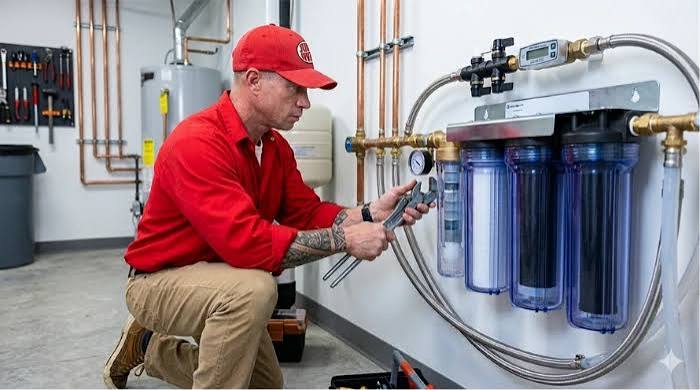
A professional water filter installation is mostly a plumbing job, with a water-quality call wrapped around it. First the installer checks your water line. Then they choose the connection point, mount the system, flush it, and make sure it neither leaks nor robs your faucets of pressure. Choosing who to call for what happens during professional water filter installation raises the real question: not “Can they put a filter in?” but “Will they install the right type of filter for my water, my plumbing, and my budget?” Under-sink jobs usually take 1 to 3 hours. Whole-house work often runs longer because of pipe size, space, and code checks.
I write about home water treatment and plumbing decisions, and people often miss the same thing: a good installation is about fit, not just hardware. The wrong system can be perfectly installed and still be the wrong answer. NSF says certification applies to the specific claim, not to the word “filtered” by itself. Simple, but easy to miss.
What the installer actually does, start to finish
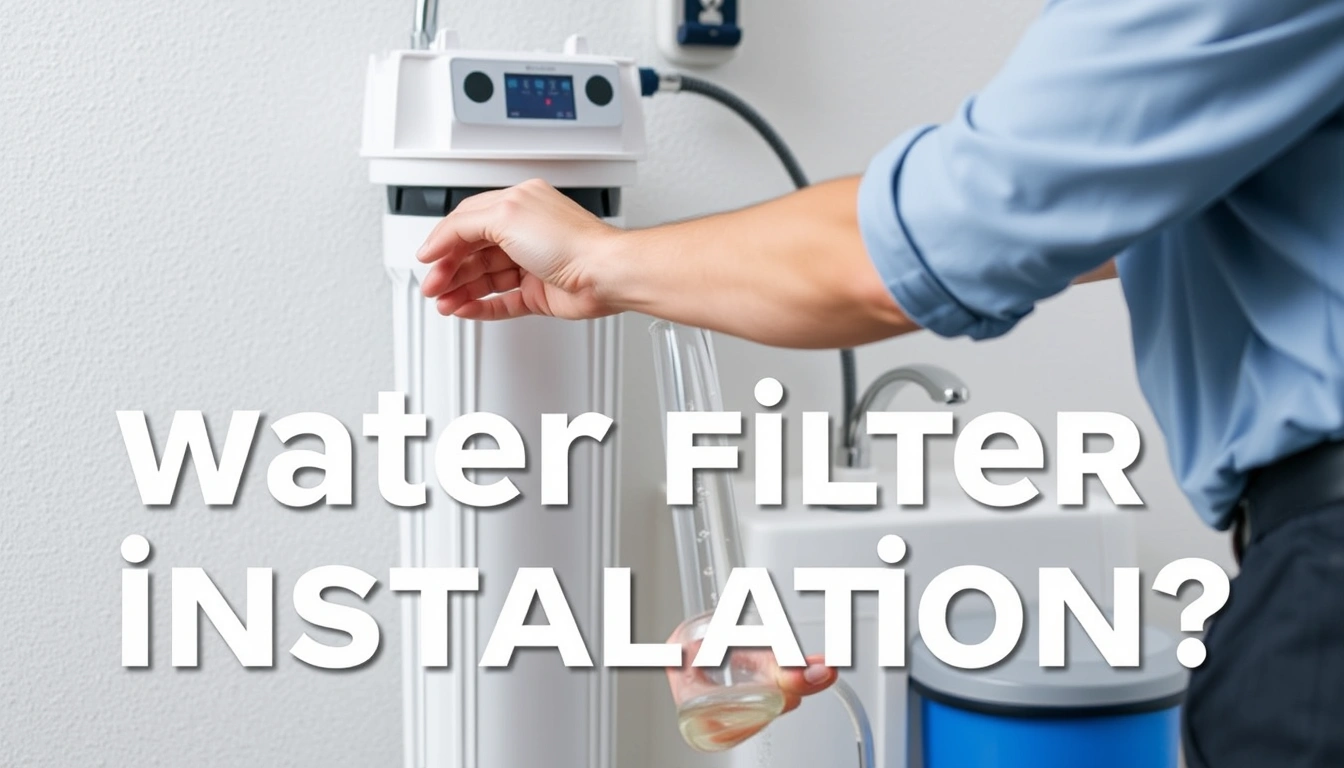
A good install starts with a water check, not a drill.
First comes the source, the pipe material, the shutoff valve, and the spot where the filter belongs. For a point-of-use under-sink system, that is usually the cold-water line plus a dedicated faucet or an appliance connection. For a whole-house system, the installer looks for the main line entry point, enough wall clearance, drain access if the unit needs regeneration or backwashing, and a dry place for the tank or housing.
Then the practical work begins: shutting off water, relieving pressure, cutting or teeing into the line, installing the housing or manifold, and sealing the fittings with the right method for the pipe type. Compression fittings, push-to-connect fittings, threaded adapters, and soldered copper connections all behave differently. That matters because a neat-looking job can still fail if the fitter picks the wrong sealant or cranks down a plastic fitting too hard. Ugly is not the enemy. Wrong is.
After the plumbing is tied in, the installer flushes the cartridges or media according to the manufacturer’s instructions. Carbon filters often need flushing to clear fines. Reverse osmosis systems need a longer initial flush plus a check of the storage tank, drain line, and permeate faucet. Whole-house systems may need media settling, a programming step, or a regeneration cycle.
Finally comes inspection and handoff: check for leaks, confirm pressure, explain cartridge changes, and show you what alarms or bypass valves do. Skip that last part, and the job is only half done.
What kind of filter are you actually buying into?
An under-sink carbon filter is the easy pick for someone who wants better-tasting water without much fuss. It is usually the least disruptive option, and it fits apartments and kitchens where space is tight. The trade-off is narrow scope: carbon improves taste and odor and may reduce some contaminants depending on the certified model, but it does not solve everything. Hardness, heavy sediment, nitrates, bacteria — carbon alone is often the wrong tool.
Reverse osmosis is the stronger choice when the goal is broader contaminant reduction at one tap. It usually includes a prefilter, membrane, storage tank, and dedicated faucet. That extra hardware is why the install takes longer and costs more to service later. It also creates reject water, which is a real drawback in places with water-use restrictions or in homes that dislike the drain connection. The Water Quality Association and EPA both note that RO performance depends on pressure and the system design.
A whole-house system makes sense when the problem starts at the source or affects every fixture. That is the right call for sediment-heavy well water, noticeable chlorine at every tap, or homes that want filtered water in showers, laundry, and the kitchen. It is not the right answer if you only care about drinking water at the sink. These systems take up space, can cut pressure if they are undersized, and often need pricier media changes.
For decision-making, model names matter less than the standard. I would want to see NSF/ANSI certification for the specific claim the seller makes. NSF/ANSI 42 covers taste and chlorine reduction; NSF/ANSI 53 addresses certain health-related contaminants; NSF/ANSI 58 is common for reverse osmosis systems. If the product page is fuzzy about certification, that is a warning sign.
How much does professional installation usually cost?
The honest answer is that the cost depends on the system type, the plumbing layout, and whether the installer has to add valves, a drain line, an electrical outlet, or a new shutoff. A simple under-sink install is usually the least expensive because it uses less labor and fewer parts. Reverse osmosis costs more because of the extra faucet, drain connection, and tank. Whole-house work costs more again because it can involve larger pipe, mounting hardware, and system programming.
Three things move the labor price: access, complexity, and code-related work. Tight cabinets, old corroded valves, and galvanized plumbing all slow the job down. If the installer also needs to bring the work up to local plumbing code, that can add time and material. In some areas, especially older homes or places with hard-water scale and sediment, an installer may recommend a prefilter or pressure-regulating component before the main filter. That is not upselling by default; sometimes it is the difference between a system that lasts and one that clogs early. That math stops working fast.
A useful quote should separate labor from equipment and list what is included: shutoff, mounting, filter cartridges, new faucet if needed, flush, and leak check. If a bid is just one lump sum with no parts list, I would ask for a breakdown.
What should a good installer inspect before touching the pipes?
Before a single pipe gets touched, a good installer should inspect the water source, pipe condition, pressure, space, drainage, and the specific contaminant concern. Sounds basic. It is where bad installs start.
City water or well water? That is the first fork in the road. City water often pushes the choice toward chlorine or chloramine reduction, which makes carbon filtration or RO more likely. Well water changes the conversation because sediment, iron, hardness, sulfur odor, and bacteria risk can all enter the picture. In well-water homes, a “standard” filter may be the wrong system if the water needs treatment beyond taste, so it is wise to consult a water-treatment professional and review a recent water test. The EPA recommends testing private wells at least once a year for bacteria, nitrates, and anything else of local concern.
Pressure matters too. A reverse osmosis system usually works best in a pressure range that supports membrane performance; if pressure is low, the installer may need a booster pump. Whole-house systems can also become annoying if they are undersized for the home’s flow rate. A family with two bathrooms and irrigation demand does not need the same setup as a condo.
Code issues and maintenance access deserve a look as well. Can you reach the bypass valve? Can you replace the cartridge without pulling out the garbage disposal? Is there a drain available for RO wastewater or backwash discharge? Is the floor protected if a housing leaks? These details separate a thoughtful installation from one that only looks neat on day one.
If the technician never asks about your water test, your pressure, or your maintenance tolerance, I would keep shopping.
The honest difference between under-sink, reverse osmosis, and whole-house installs
Under-sink systems win for simplicity, reverse osmosis wins for broader single-tap filtration, and whole-house systems win for whole-home treatment. That is the cleanest way to think about it, and it is also where a professional should tailor the recommendation to the water test and the home.
| Criteria | Under-sink carbon | Reverse osmosis | Winner for [condition] |
|---|---|---|---|
| Install complexity | Usually simplest; fewer parts and no storage tank | More involved; tank, faucet, and drain line are typical | Under-sink carbon for quick, low-disruption jobs |
| Space needed | Small footprint under the cabinet | More cabinet space because of the tank and membranes | Under-sink carbon for cramped kitchens |
| Contaminant scope | Good for taste and odor; depends on certification | Broader reduction at a single tap, especially NSF/ANSI 58 systems | RO for wider drinking-water concerns |
| Effect on flow/pressure | Usually minimal at the main faucet | Can have slower dispense rates from the RO faucet | Carbon for users who dislike slow fill times |
| Maintenance | Cartridge swaps are usually straightforward | More parts to service: prefilters, membrane, tank checks | Carbon for low-maintenance preference |
| Wastewater | No drain waste in most setups | Produces reject water by design | Carbon where water conservation matters |
| Best use | Taste, odor, and point-of-use convenience | Drinking water with stricter contaminant goals | Depends on water test and goal |
| Typical service burden | Lower for both install and routine changes | Higher because of the tank and drain components | Carbon for simpler ownership |
My take is plain: choose under-sink carbon if you want the least invasive install and your issue is mostly taste or smell. Choose RO if you want a stronger drinking-water system and can accept the space, drain, and maintenance trade-offs. For whole-house treatment, talk to a professional first; use it only if the issue affects every fixture or the source water needs front-end treatment.
What makes a bad installation obvious?
A bad install usually announces itself in the first week, not the first year.
Leakage is the easiest clue. Fittings, shutoff, or drain connection — any one of them can drip. Even a slow drip matters because it can swell cabinet bottoms or stain floors before you notice.
Pressure problems show up next. If the installer undersized the system or added a filter with too much restriction, you may see weak flow at the tap or sluggish refill times. In a reverse osmosis setup, very slow output can mean low inlet pressure, poor membrane performance, or a tank problem. In a whole-house job, pressure loss at showers and fixtures means the system may not match the home’s demand.
Noise gives away plenty too. Air in the lines, hammering, continuous drain flow, or a system that regenerates too often suggests the configuration is off. A competent installer should explain what normal startup noise sounds like and what is not normal. No explanation? That leaves you guessing later.
The worst installs ignore maintenance access. If you cannot reach the bypass, cannot replace the cartridge without removing half the cabinet, or cannot tell which way the flow goes, the install may have been built for the installer’s convenience, not yours.
When should you not hire for a filter install at all?
Pause the hire if you have active leaks, severely corroded plumbing, unknown well water, or a water-quality problem that has not been identified. A filter is not a substitute for diagnosis.
If the water is discolored after plumbing work, smells like rotten eggs, or comes from a private well that has not been tested recently, I would start with water testing and plumbing inspection, not product selection. A filter installed on top of a bigger issue can hide symptoms without solving the cause. In health-related situations, a licensed plumber and a qualified water-quality professional are the right people to ask first.
You should also hesitate if the installer will not say whether the system is certified for the specific claim being made. NSF/ANSI certification matters because “filtered” is not the same as “certified to reduce a contaminant.” That difference is not marketing trivia; it is the buying decision. The EPA and NSF both stress that certification should match the exact contaminant reduction claim.
And if the quote leaves out permits, drain work, replacement valves, or ongoing maintenance costs, the price is not complete. Ask for the missing pieces before you sign.
Which filter should I choose if I want the installation to go smoothly?
Choose the simplest system that solves the actual water problem. That is usually the one that goes in cleanly, costs less to maintain, and causes fewer surprises later.
If your main concern is taste, odor, or chlorine at one sink, an under-sink carbon system is the easiest professional install. If you want stronger contaminant reduction at the kitchen tap and can live with a tank, a drain line, and more maintenance, reverse osmosis is the better fit. If the entire house has sediment, odor, or a source-water issue, a whole-house system is worth the bigger install.
My recommendation is blunt: do not pay for whole-house treatment if only one drinking tap needs help, and do not buy the cheapest under-sink filter if your actual concern is beyond taste. The right installation starts with the right category. No shortcut there.
Choose under-sink carbon if you want the least disruptive install and only need better-tasting water at one tap. Choose reverse osmosis if you want broader drinking-water treatment and can accept the tank, drain, and slower faucet flow. Neither if your water has an unresolved safety issue, active plumbing damage, or no recent water test.
What should I ask before I book the installer?
Before you book, ask three things: what system they recommend for your water, what the price includes, and what maintenance you will owe afterward. That is the fastest way to separate a real installer from a parts-swapper.
I would also ask whether the quote includes a bypass valve, new shutoff, dedicated faucet, drain connection, cartridge flush, and leak check. Ask what happens if your plumbing is copper, PEX, CPVC, or galvanized, because the connection method changes. If you have well water, ask whether they are comfortable working from an actual water test rather than guesswork. According to the CDC and EPA, private well owners should test regularly, not assume the water is safe.
A good installer should be able to explain why NSF/ANSI 42, 53, or 58 matters for the model they are quoting, and what the filter certification covers. In practice, that should come with one or two numbers: what contaminant is reduced, by how much, and under which standard. Ask for the exact model number, too, because certification is model-specific.
Leave a Reply