Last updated: September 10, 2026
Key Takeaways
- Quick answer: for most homes, the right choice in the whole house water filter vs under sink filter decision depends on scope, with whole-house systems treating every tap and under-sink systems focusing on one sink.
- Need cleaner water at every tap? A whole-house filter is often the better fit.
- A whole-house system is often the better fit when the problem starts before water reaches any faucet.
- A whole-house unit does not usually create “bottled-water quality” at every tap.
- For a family that wants one install to affect only the kitchen, an under-sink filter is often the better fit.
Need cleaner water at every tap? Then a whole-house filter usually wins. But if your only concern is the kitchen sink, an under-sink filter tends to deliver more targeted treatment for less money and less plumbing. Still, a professional should confirm the right setup for your water report.
I write about home water treatment as a contractor-facing decision, not as a lifestyle upgrade, so I look at what gets fixed, what gets skipped, and what a bad install usually creates: pressure loss, leaks, and the wrong filter stage for the actual water problem. Consult a qualified water-treatment professional, and check NSF guidance on certified products and standards before you buy. NSF water filter certification
The real difference is where the water gets treated in the whole house water filter vs under sink filter choice
A whole-house system often makes sense when the problem starts before water reaches any faucet — but a professional should confirm that the main-line setup fits your home. It treats all incoming water at the point of entry, so showers, laundry, toilet fill, hose bibs, and appliances all see the same water quality change. That matters if your city water has sediment, chlorine taste, or you’re trying to protect a water heater, dishwasher, or ice maker from grit. CDC home water treatment
An under-sink filter often makes sense when the trouble is local and specific — and again, a professional should confirm that one fixture is enough. It treats only one outlet, usually the kitchen faucet, and often gives a better result for drinking and cooking than you can justify filtering the whole house for. A good under-sink reverse osmosis system may include a carbon block and membrane stages that are hard to justify on a whole-house line because the flow demand would be too high. That math stops working fast. EPA WaterSense
Scope is the catch. A whole-house unit does not usually create “bottled-water quality” at every tap. It is often a sediment filter, carbon tank, or scale-control system, not a full reverse osmosis setup. An under-sink filter does not solve shower water, laundry issues, or plumbing scale elsewhere in the home.
For a homeowner in a hard-water area, a common split is this: whole-house softening or sediment treatment at the entry point, then an under-sink carbon or reverse osmosis unit for drinking water. A licensed plumber or water specialist should match that layout to the water test. Not overkill, if the report supports it; just two jobs, handled in two places. EPA private wells
Whole-house water filters: who they fit and who should skip them
A whole-house filter wins for a family that wants one install to affect the entire home. It is the right call when you have visible sediment, frequent cartridge loading, chlorinated city water, or a specific need to protect appliances and plumbing. It also makes sense if you rent one unit of effort and want the benefit at every fixture, not just the kitchen.
Coverage is the strength. A properly sized system can reduce sediment before it reaches a tankless heater or washing machine, and a carbon-based system can improve taste and odor across the house. That broad effect is why these systems are often paired with a pressure tank, bypass valves, and service clearance around the main line.
But the weakness is size and plumbing impact. Whole-house units are not invisible. They take space near the main shutoff, and the wrong cartridge or tank size can create a pressure drop you will notice at showers. Installation can also require cutting into the main line, adding fittings, and in some homes dealing with cramped basements, crawlspaces, or exterior meter locations.
Who should skip it? Households that only want better drinking water, people in apartments or condos where main-line plumbing changes are not practical, and homeowners on a tight budget who do not need whole-house coverage. If your water problem is only taste at the kitchen sink, a whole-house filter is a lot of plumbing for one glass of water.
Cost also tends to scale with scope. A basic whole-house sediment or carbon setup is usually a bigger job than an under-sink filter because it involves more fittings, more space, and more labor. The exact price depends on pipe material, access, and whether the system needs a bypass, a prefilter, or a drain connection. For anything involving the main line, I would ask the installer to spell out what happens if the pressure drop is unacceptable after startup.
Under-sink filters: the better choice for drinking water
An under-sink filter wins if your real goal is better water for drinking, cooking, coffee, and ice. It gives you treatment where you actually use the water most carefully, and it avoids changing the rest of the house. That is why it is the smarter choice for many homes with decent municipal water and one complaint: taste, odor, or specific contaminants at the tap.
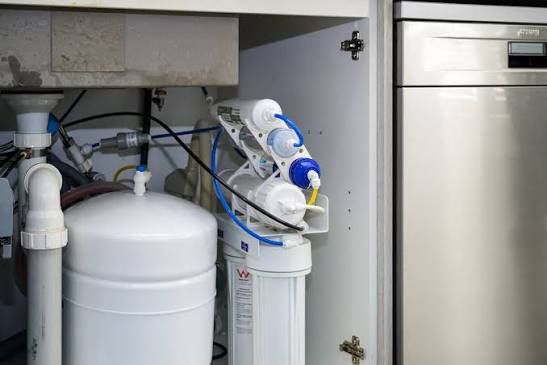
The best-known format here is a multi-stage cartridge system or reverse osmosis unit mounted in the cabinet. That package is compact, typically tucked under the sink with a small dedicated faucet or a connection to the main faucet if the design supports it. The performance is more localized, but the treatment can be more aggressive than a whole-house carbon tank.
The drawback is obvious: it does nothing for showers, laundry, or the water heater. If your issue is rust stains in the tub or grit in the dishwasher, an under-sink filter does not touch that. It also needs more regular attention at one point of use, and some reverse osmosis systems waste water during treatment, which matters in areas where water rates are high or where conservation is a concern. EPA WaterSense reports that conventional under-sink reverse osmosis systems can waste several gallons for every gallon produced, so check the model before you buy. EPA WaterSense product search
Honestly, I would choose under-sink first for a homeowner who drinks tap water but is otherwise satisfied with the rest of the home. It is also the more realistic option for people who want a meaningful improvement without reworking the main plumbing line. The cabinet space requirement is a real constraint, though. If the sink base is packed with disposals, pull-out trash bins, or a water heater, the install can get awkward fast.
Ask the installer about NSF/ANSI certification for the contaminant claims you care about, not just “filtered water” as a vague promise. NSF/ANSI 42, 53, and 58 are common standards for taste, health-related claims, and reverse osmosis performance. The standard matters because the wrong filter stage can look good on a sales sheet and still miss the substance you wanted removed. NSF water filtration guide
The honest side-by-side
A clean comparison comes down to where the problem lives and how much of the house needs fixing.
| Criteria | Whole House Filter | Under Sink Filter | Winner for this condition |
|---|---|---|---|
| Coverage | Treats water to the whole home | Treats one sink or one fixture | Whole house for showers, laundry, appliances |
| Drinking water quality | Often good, but varies by system | Usually stronger for drinking-focused treatment | Under sink for taste and contaminant removal |
| Install complexity | Higher; main line work and more space | Lower; cabinet install at one point | Under sink for easy retrofits |
| Pressure impact | Can be noticeable if undersized | Usually localized | Under sink for preserving shower pressure |
| Maintenance | Larger cartridges/tanks, less frequent but more involved | Smaller cartridges, easier access | Under sink for simple upkeep |
| Appliance protection | Better for heaters, washers, dishwashers | None | Whole house for sediment and scale control |
| Space needed | Mechanical area near main shutoff | Cabinet space under sink | Under sink for small homes |
| Best use case | Whole-home water problems | Drinking and cooking water only | Depends on scope of the problem |
| Typical job cost drivers | Plumbing access, main-line tie-in, bypass, prefilter | Stage count, faucet type, cabinet space | Whole house when whole-home benefit is needed |
| Downtime on install day | More likely to require water shutoff | Usually shorter shutoff window | Under sink for minimal disruption |
The table only points one way if the reader defines the problem honestly. Whole-house systems are about broad coverage and protection. Under-sink systems are about concentrated treatment where it matters most. A generic comparison often pretends they are interchangeable. They are not.
What changes the cost and the install time?
A whole-house filter usually costs more to install because the job is more physical and more unforgiving. The plumber may need to cut the main line, add unions or bypass valves, secure the system to a wall or slab, and confirm that the filtered water still delivers acceptable pressure at the farthest fixture. Access can add more time than the filter itself. A basement with an open main line is one thing; a tight utility closet in a slab home is another.
An under-sink filter is usually faster because it lives inside one cabinet and ties into a single cold-water line. The install can still get complicated if the sink is crowded, the shutoff valve is old, or the owner wants a dedicated faucet through stone or composite counters. Reverse osmosis systems also need a drain connection, and that detail trips up rushed installs.
For scheduling, I would expect an under-sink job to be the lighter appointment and a whole-house install to be the half-day that can stretch if the plumbing is old. If the house has galvanized pipe, low clearance, or a poor main shutoff, the quote should reflect that risk. When a contractor gives a price without asking about pipe material, water pressure, or access, that is a warning sign.
A bad job is easy to spot. Leaks at compression fittings, a bypass valve that does not fully isolate the unit, reduced pressure at two or more fixtures, or a cabinet installation that leaves no room to change cartridges are all real problems. For whole-house systems, I would also watch for a system installed without a sediment prefilter where the water visibly carries grit. For under-sink systems, I would be wary of a reverse osmosis unit without a clean drain path or with tubing routed so tightly that a future filter change becomes a wrestling match.
When does the answer flip?
The overall verdict flips in a few specific situations.
First, if your main concern is scale in a hard-water area and you want to protect the whole plumbing system, a whole-house solution paired with softening is the more sensible route than a kitchen-only filter. That is especially true if your water heater or dishwasher is already showing mineral buildup.
Second, if you are on a well with sediment, iron, or sulfur odor, the answer is rarely either/or. A whole-house pretreatment setup may be necessary before any under-sink drinking filter can work properly. In that case, the drinking-water filter is the finish line, not the starting point.
Third, if you live in an apartment, condo, or any place where you cannot alter the main supply line, the whole-house option is off the table. An under-sink unit is the practical answer as long as the cabinet and plumbing allow it.
Fourth, if your local water report shows a specific contaminant that needs targeted treatment at the kitchen tap, an under-sink reverse osmosis or certified specialty filter may beat a whole-house carbon system by a wide margin. That is the kind of case where one sink gets the higher-end treatment and the rest of the home stays unchanged.
Which one should you actually choose?
Choose a whole-house filter if you need better water at every faucet, want appliance protection, and have the plumbing space for a main-line install. Choose an under-sink filter if your real goal is better drinking and cooking water and you do not want to alter the rest of the house. Neither if your water problem is not identified yet; get a water test or a utility report first, because buying the wrong stage is an expensive way to solve the wrong issue.
That is the clean decision in the whole house water filter vs under sink filter comparison. Whole-house for whole-home problems. Under-sink for kitchen-only concerns. If your situation includes hard water, well water, iron, sulfur, or a known contaminant, the answer can change fast, and it should change based on the water analysis, not on the marketing on the box.
What should I ask a contractor before I hire them?
Ask what problem the system is meant to solve, what standard backs that claim, and what happens to pressure after install. If they cannot name the contaminant, the sediment size, or the NSF/ANSI standard they are relying on, they are selling a category, not a solution.
Also ask whether the quote includes bypass valves, drain routing if needed, cartridge startup, and cleanup. For a whole-house system, I would want to know how much clearance is needed around the filter housing and whether the main shutoff is functional before work starts. For an under-sink system, I would ask how much cabinet space is required and whether a dedicated faucet or drain line is part of the job.
How do I know if the job was done badly?
A bad whole-house install leaves clues fast: pressure drops, leaks around fittings, a system mounted where cartridges cannot be changed easily, or water that still carries sediment because no prefilter was used. A bad under-sink install usually shows up as slow leaks, noisy operation, a cramped cabinet that makes filter changes miserable, or a faucet that was added without respecting countertop clearance.
If the contractor leaves without showing you the bypass, the shutoff points, and the filter change steps, that is a miss. A good install should be serviceable, not mysterious.
FAQ
Do I need both a whole-house filter and an under-sink filter?
Sometimes, yes. A whole-house unit can handle sediment, chlorine, or hardness-related issues, while an under-sink reverse osmosis unit can handle drinking water more aggressively. That combination makes sense when the water has more than one problem.
Will a whole-house filter lower my water pressure?
It can if it is undersized, clogged, or matched poorly to the home’s flow demand. That is why sizing and prefiltration matter. A good installer should account for fixture count and pressure before quoting the job.
Is an under-sink filter enough for well water?
Not by itself in many cases. Well water often needs sediment treatment, iron control, sulfur treatment, or disinfection before a kitchen-only filter is worth much. The water report should drive the setup.
Which system is easier to maintain?
An under-sink filter is usually easier to access, especially if it uses cartridges in a cabinet. A whole-house system may need less frequent service, but the service itself is more involved and is often in a less convenient location.
What should I ask about before I sign the quote?
Ask for the filter’s target use, the standards it meets, what is included in labor, how long the install should take, and what the main trade-off is. If the answer is vague, keep looking.
Leave a Reply