Last updated: September 10, 2026
Key Takeaways
- You can usually pin down the cause in about 20 to 40 minutes with a few checks and one simple comparison.
- Bigger housings often make sense. Especially when you want filtration and usable pressure.
- Sometimes the filter is not the whole story; call a licensed plumber or water-treatment professional, especially if low pressure affects more than one fixture.
- A filter lowers pressure because every cartridge, screen, membrane, and valve adds resistance to flow.
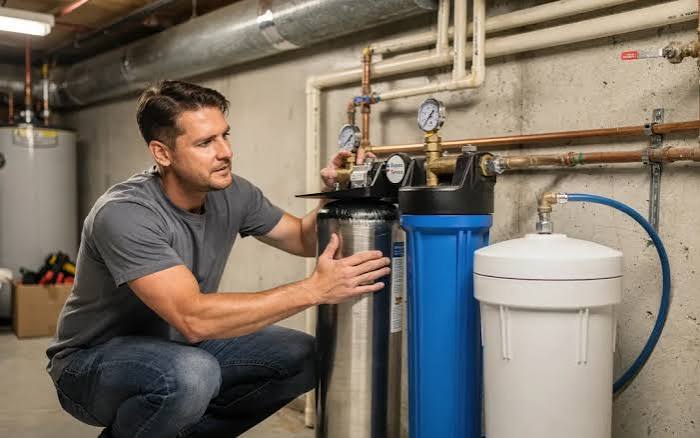
Right after a filter goes in, a weak tap can be maddening. Why is my water pressure lower after installing filter? Usually, the answer is plain: the unit is too restrictive, it was installed backward, or it is catching debris already sitting in the line. I mean actual pressure loss at the faucet, not the normal difference between a main line and a bathroom sink. This article applies if you installed a point-of-use filter, under-sink filter, shower filter, whole-house cartridge, or reverse osmosis prefilter, and you already know the filter is the new variable in the system.
Whole-house weak pressure is a different animal. So is sudden pipe banging, rusty water after a shutoff, or a pressure issue that started before the filter went in. In those cases, the filter may be only part of the problem. Call a licensed plumber or water-treatment professional instead of assuming the cartridge is to blame.
Why the filter changed your pressure
A filter lowers pressure because every cartridge, screen, membrane, and valve adds resistance to flow. Normal. What is not normal is a drop big enough to make a faucet feel weak, a shower spray turn thin, or an appliance take forever to fill.
The term to watch is pressure drop: the loss of pressure between the inlet side and the outlet side of the filter. Every filter has some of it. The question is whether yours is small and expected, or large enough to signal trouble. A 5-micron sediment cartridge will usually restrict flow more than a 20-micron cartridge. A carbon block filter is often more restrictive than loose granular carbon. And an RO membrane system is supposed to be restrictive; the storage tank is there to compensate.
A generic article often stops at “filters reduce pressure.” That misses the useful part. If the filter is installed correctly, a noticeable drop usually means one of four things: the filter is too fine for the job, it is clogged early, it is installed backward or with a valve partly closed, or the home already had marginal supply pressure and the filter pushed it over the edge. That math stops working fast.
I’d split the issue into two questions. Did the pressure fall only at the filtered outlet, or across the house? And did it happen immediately after installation, or after a few days or weeks? Those two answers point you in different directions.
Is my filter too restrictive for my plumbing?
Yes — if the filter’s rated flow is below the fixture demand, the pressure will feel low even when the supply is fine. A kitchen faucet can live with modest flow loss; a shower or whole-house setup cannot.
Start with the specs, not the marketing copy. Look for:
– micron rating
– flow rate in gallons per minute
– maximum operating pressure
– whether the cartridge is pleated, spun, carbon block, or membrane-based
A 10-micron sediment filter removes finer particles than a 20-micron filter, but it usually creates more resistance. A carbon block cartridge often gives better taste reduction than loose carbon, yet it can choke flow faster. If you installed a shower filter with a tiny cartridge and then a low-flow showerhead, the combined restriction can make the spray feel weak even though nothing is “broken.”
Also check whether the filter matches the pipe size and fixture type. A 3/8-inch under-sink line feeding a high-demand faucet through a small inline filter is a common bottleneck. So is a whole-house cartridge rated for 5 gpm on a home that needs much more when two showers and a washing machine run at once. In one NSF/ANSI 42 test context, cartridge pressure drop is reported at a defined flow rate, which is why the rated gallons per minute matter as much as the micron number.
The practical rule is simple: if the filter’s flow rating is close to or below the fixture’s demand, expect pressure loss. If you do not know the demand, treat a sudden drop at one fixture as a sign that the filter may be undersized for that job, and verify the setup with a plumber or water-treatment pro if needed. Thin straw, big gulp. Bad pairing.
How do I tell whether the filter, the install, or the supply is the problem?

You can usually isolate the cause in about 20 to 40 minutes with a few checks and one simple comparison. Do the checks in order so you do not replace a part that is fine.
- Bypass the filter if the system allows it. Set the bypass valve to open or remove the filter cartridge according to the manufacturer’s design. Verify that water flow returns to normal at the same faucet or hose bib. If pressure does not improve, the filter is probably not the only restriction; a plumber can check the PRV, shutoff valves, and piping.
- Check the inlet and outlet orientation. Look for arrows on the housing or head and confirm water enters the inlet and exits the outlet. Verify the labels against the piping, not just the way the housing sits on the wall. A backward cartridge housing can starve flow or prevent sealing.
- Confirm every shutoff valve is fully open. Turn the supply valve counterclockwise until it stops, then back it off slightly if the handle design requires it. Verify the handle is parallel to the pipe on quarter-turn valves. A valve left half-open can mimic a clogged cartridge.
- Inspect the cartridge seating and O-rings. Remove the housing, seat the cartridge squarely, and check that the O-ring is clean, lubricated if the manufacturer calls for it, and not pinched. Verify there is no twisting or cocking. A pinched seal can restrict flow and leak at the same time.
- Flush the filter for the manufacturer’s recommended volume. Many carbon filters need several gallons of flush water before they stop shedding fines. Verify the water clears and the flow improves after flushing. If it stays cloudy or weak, the cartridge may be packed too tightly or defective.
- Check for sediment at the inlet screen or prefilter. Shut off water, remove the screen, and look for sand, scale, or rust flakes. Verify the screen is clean and seated properly. Debris often appears right after a shutoff because disturbed pipe scale breaks loose.
- Measure pressure before and after the filter. Use a simple hose-thread pressure gauge or a gauge tee, then compare the inlet and outlet under the same condition. Verify the difference is small at rest and larger only when water is flowing. A large gap under flow points to excess restriction in the filter or piping.
- Test another fixture on the same branch. Open a nearby faucet or spigot. Verify whether the drop is isolated to one filtered tap or affects the whole branch. If only the filtered outlet is weak, the issue is local. If multiple fixtures drop, the supply or main valve may be involved.
A good result is easy to spot: the filtered faucet runs close to its pre-filter flow, the water clears after flushing, and the outlet pressure no longer sags sharply when you open the tap. If the cartridge is already dirty after a short time, the line likely carries more sediment than the filter can handle alone.
What should I check before I blame the filter?
Check the home’s incoming pressure, the age of the plumbing, and where the filter sits in the line. A filter often gets blamed for a problem that was already there but had not shown up yet.
A pressure-reducing valve, often called a PRV, is a common source of confusion. It sits on the main line and keeps house pressure in a safe range. If the PRV is set low, a filter added downstream can make the whole system feel weak. A partially closed main shutoff can do the same thing. Seeing low pressure at multiple taps, not just the filtered one, means the filter may have exposed a marginal supply.
Pipe material matters too. Older galvanized pipe, especially where internal corrosion has narrowed the bore, reacts badly to any added restriction. A filter that seems fine on newer PEX or copper can reveal weakness in old steel lines. That is why a whole-house cartridge on an older home often needs a larger housing and a coarser prefilter than a small apartment setup.
Component order matters as well. A softener, sediment filter, carbon block, and UV unit can each add resistance. Put them in the wrong sequence and you can create a bottleneck. In many treatment trains, sediment removal comes first, then carbon, then the finer device if one is needed, but the right order depends on the water and equipment, so confirm it with the manufacturer or a professional. If a carbon block is placed before the sediment stage in a dirty-water application, it can clog quickly.
I would not assume “new means better” here. A 1-micron cartridge is not automatically an upgrade over a 5-micron cartridge. It may improve particle removal but worsen flow enough that the faucet becomes annoying to use.
When should I stop troubleshooting and change the setup instead?
Stop chasing small fixes when the filter is simply the wrong tool for the flow you need. These are the cases where I’d change the setup, not keep trying the same cartridge.
The pressure drop is only at one filtered faucet and the filter has a low flow rating: The cartridge is undersized for that fixture — replace it with a higher-flow model or a larger housing.
The filter clogs again within days or a few weeks: The incoming water has more sediment than the cartridge can handle — add a proper sediment prefilter or a larger first-stage filter.
The filter is a fine carbon block on a whole-house line: That setup can be too restrictive for multiple fixtures — move the carbon stage downstream or use a larger housing rated for higher flow.
The home already has weak pressure at multiple taps: The filter is not the root cause — check the PRV, main shutoff, or old piping before changing more filter parts.
The system is an RO unit and the faucet feels slow: That is often normal for reverse osmosis because the tank and membrane are part of the design — verify the storage tank charge and the prefilters before assuming a fault.
The filter housing is small, opaque, or hard to service: A compact design can be a maintenance trap — a larger clear housing or easier cartridge format may save time even if it costs more upfront.
Common mistakes people make after a filter install
The first mistake is using a cartridge that is too fine for the job. A 1-micron filter can be excellent on dirty water, but it can also make a kitchen faucet feel starved. The fix is to step up to a coarser stage, such as 5 or 10 microns, or increase housing size.
The second mistake is forgetting to flush carbon fines. Carbon block filters often shed black dust at first. If the cartridge is not flushed per the manufacturer’s instructions, the outlet can feel sluggish and the water may look dirty for longer than it should. The fix is to flush until the water clears and flow stabilizes.
The third mistake is leaving a valve partly closed. Basic, yes. Common, too. The result is a false diagnosis: people replace a cartridge that was never the problem. The fix is to verify every valve position and not trust handle position alone.
The fourth mistake is installing the cartridge backward. Some housings make this hard to see, especially under a sink. The result can be a severe pressure drop or no flow at all. The fix is to read the arrows on the housing head and match inlet to outlet before closing the canister.
The fifth mistake is ignoring sediment upstream. If the new filter quickly loads with rust, sand, or scale, it is doing its job and showing you the real problem. The fix is to add a sediment stage, clean the inlet screen, or address the piping source.
The sixth mistake is assuming every low-flow symptom is pressure. Sometimes the faucet aerator, showerhead, or hose bib screen is partly clogged, and the filter just happens to be the last thing installed. The fix is to test flow with the aerator removed or by checking an unfiltered outlet on the same branch. That simple test is often enough to separate a clogged screen from a filter issue.
What does a good fix look like, and how long should it last?
A good fix restores useful flow without sacrificing the filtration you actually need. Plain and simple. The tap should feel normal again, the cartridge should not clog immediately, and the pressure difference across the filter should stay reasonable during ordinary use.
For a point-of-use filter, I would want the faucet to run steadily without sputtering, and I would expect a pressure gauge to show only a modest loss across the housing at rest. For a whole-house setup, I would want showers, sinks, and appliances to work together without one fixture collapsing when another opens. If the filter is part of an RO system, some slow delivery is expected, but the tank should refill in a sensible amount of time and the stream should not fall off a cliff after a few seconds.
Durability depends on water quality, cartridge size, and usage. A filter in a sediment-heavy house may need service far sooner than the package suggestion. A larger housing, such as a standard 10-inch or 20-inch canister, usually gives more surface area and less restriction than a tiny inline unit. That is why bigger housings often make sense when the goal is both filtration and usable pressure.
I would choose the least restrictive filter that still solves the water problem you actually have. If you want taste improvement, you may not need ultra-fine filtration. If you want sediment protection, a staged approach often works better than one tight cartridge. The wrong setup can be technically “better” on paper and worse in daily life.
Quick answers to the questions people ask most
Can a new water filter lower pressure? Yes. Any filter adds resistance, and a fine or clogged cartridge can make the drop noticeable.
Is low pressure after a filter always the filter’s fault? No. A partly closed valve, a bad PRV, old galvanized pipe, or debris in the line can cause the same symptom.
How do I know if the cartridge is clogged? The flow gets weaker over time, the pressure drop increases when water is running, and the filter may look dirty or load up faster than expected.
Should I remove the filter if pressure is low? Only as a test or if the filter is the wrong size for the job. If you need filtration, the better fix is usually a larger or less restrictive setup.
Do reverse osmosis systems always have low flow? They are designed to be slower than a normal faucet, but they should still work within the limits of the tank, membrane, and prefilters. NSF notes that filter and system performance depends on the tested configuration, so verify the model rather than assuming all RO units behave the same.
For more on pressure loss and flow, see NSF/ANSI drinking-water filtration standards, the EPA’s guidance on home water treatment, and your filter manufacturer’s published flow ratings.
Leave a Reply